Test your sensor and AI solutions in real-world conditions before making large-scale investments. Run your PoC processes on a scientific basis with the consortium’s powerful infrastructure.
Our Advanced Testing and Validation Infrastructure
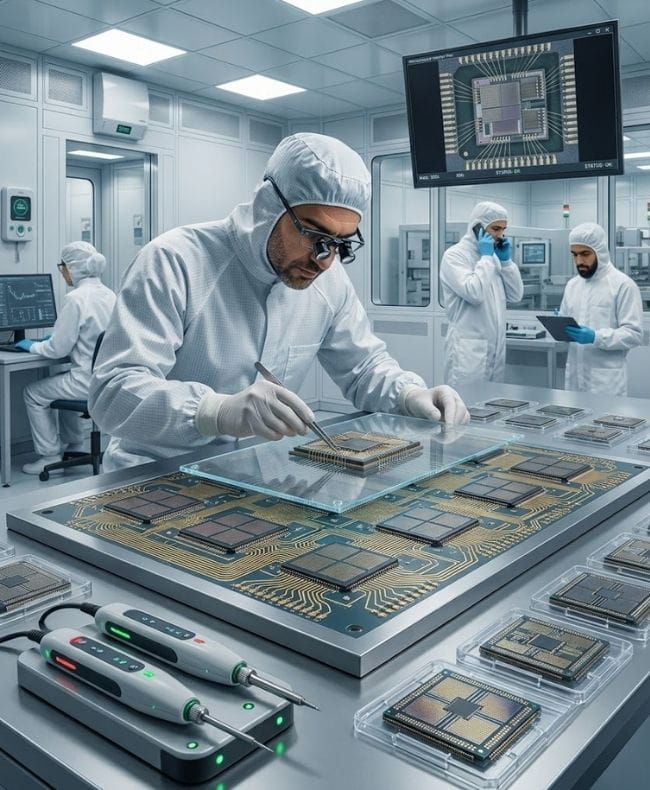
The SENSOR HUB consortium brings together Türkiye’s most advanced sensor technology research infrastructures. Under this service, SMEs and public organisations can test solutions they have developed in areas such as biomedical monitoring, environmental measurement, food safety and digitisation of manufacturing in real-life scenarios. AI-powered data analysis makes test results more reliable and predictable, accelerating your commercialization steps.
Deploying projects that require sensor technologies and artificial intelligence integration into industrial production lines and commercial markets demands high-cost hardware and software investments. Leveraging our consortium power, we enable enterprises to validate their innovative solutions before committing to large-scale capital expenditures. Through global-standard PoC and validation reports, we minimize both the financial and technical risks of your innovative solutions.
Our Solutions Within the Scope of Testing Before Investing
Digital Maturity Assessment (DMA)
We take a technological X-ray of your business in full compliance with European Commission standards. [ Free ]
Proof-of-Concept (PoC) Development
We conduct scientific proof-of-concept processes to transform your innovative ideas into reality. [ Project-Based ]
Sensor & AI Data Analysis Lab
We provide advanced processing of collected industrial data through cutting-edge artificial intelligence algorithms. [ Hourly Billing ]
Prototyping & Validation Lab
We manufacture physical prototypes of developed hardware and perform rigorous technical validation tests. [ Hourly Billing ]
Field Testing & Demo Cooperation
We test your technologies directly on real production lines and within actual industrial scenarios. [ Contract-Based ]
Sensor & AI Demo Days
We bring your developed innovative solutions together with leading investors and technology industry pioneers. [ Free ]
Validate Your Technology Under Real-World Conditions
Get in touch with us today to leverage the advanced laboratory infrastructures of SENSOR HUB consortium partners, and to launch your prototyping and field testing workflows.
Frequently Asked Questions About Testing Processes
Which consortium infrastructures can we utilize during the testing and validation processes?
Depending on the nature of your projects, you can directly utilize the advanced infrastructures of Sabancı University SUNUM (850 m² Cleanroom), METU MEMS (Microfabrication Laboratory), Bilkent UNAM (Nanotechnology Research Infrastructure), TÜBİTAK MAM (Environmental Monitoring Pilot Plants), and ATAP-EDIC (Industrial Testing Center).
How is the commercial and technical confidentiality of our developed products protected?
Before any testing, PoC, or prototyping process initiates within SENSOR HUB, a legally binding non-disclosure agreement (NDA) matching international standards is signed between the parties. All data and intellectual property rights regarding your project are strictly protected.
How is the Field Testing and Demo Cooperation workflow executed?
Your sensor and AI solutions validated in laboratory environments are deployed and tested on actual manufacturing production lines, pilot areas, or industrial setups of our consortium and industrial partners. This allows the real-world performance of the product to be reported on a contract basis.
Is it mandatory to undergo a Digital Maturity Assessment (DMA)?
While not strictly mandatory, we highly recommend undergoing a DMA as a first step so that you can prioritize your access to subsidized laboratory services, grants, and support under European Commission rules, while clearly evaluating your enterprise’s technological roadmap.